Your Ticket Won. Your Wallet Lost: Settling Bets in a Dumping Market
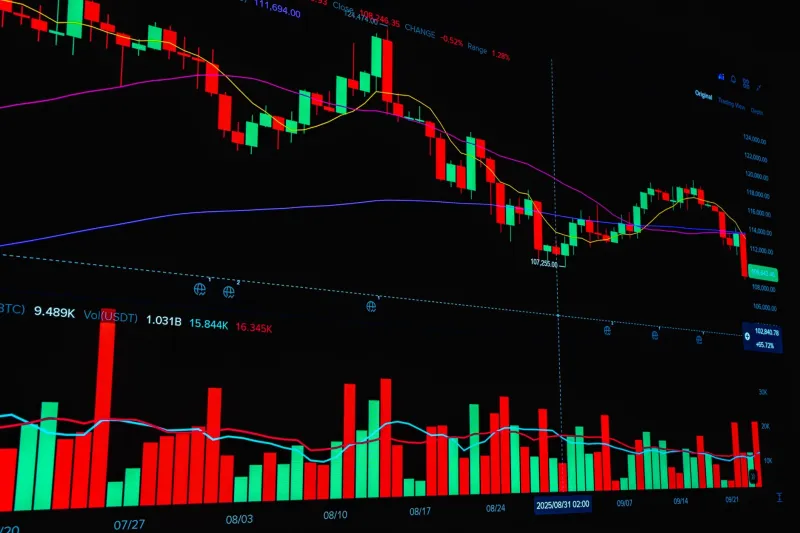
Here's a scenario every crypto bettor eventually lives through: you fire off a four-leg parlay on a Sunday, BTC is sitting around $67K, and by the time the last leg cashes Monday night, Bitcoin has slid to $62K. Your ticket won. The math on your slip says you're up big. But your balance in satoshis — the only number that matters at withdrawal — tells a different story.
So did you win or lose? The honest answer is: yes.
Two Clocks, One Bet
When you place a wager denominated in BTC, you're actually making two bets whether you realize it or not. The first is the obvious one — the game, the line, the outcome. The second is a leveraged position on the coin itself, opened the moment you deposit and closed the moment you withdraw.
Most bettors only price in the first bet. That's the mistake.
The second bet has its own settlement rules, and they vary more than most people think. Broadly, crypto books handle payouts one of two ways:
Lock-in pricing. Some books snapshot the USD value (or the stake amount) at bet placement and credit your win based on that moment. Your ticket's payout in coin terms gets locked when you click confirm. If BTC drops after, the book eats it — or more accurately, the book priced that risk into its vig from the start.
Payout-time pricing. Other books settle in pure coin terms. You staked 0.01 BTC, you won at 2.5 odds, you're credited 0.025 BTC. What that's worth in dollars when it hits your wallet is your problem, not theirs.
Neither model is a scam. But they're very different products, and most bettors couldn't tell you which one their book runs. Check the terms. It's usually buried in a section called something like "Cryptocurrency Wagering" or "Settlement of Wagers." If you can't find it, ask support before your next deposit — the answer should take them thirty seconds.
Why the House Almost Never Eats the Volatility
Here's the part that surprises people: even "lock-in" books rarely carry real market risk. A sportsbook running on crypto isn't a market maker in Bitcoin. They convert deposits to stablecoins or fiat, or they hedge on an exchange, or they simply pass the exposure through in the odds.
Think about it from the operator's side. If a book promised to pay your Sunday ticket at Saturday's BTC price no matter what, and Bitcoin gapped down 15% overnight, they'd be paying out dollars they never collected. No book survives doing that at scale. So the "lock-in" is usually a pricing convention, not a hedge — the odds you're offered already bake in the coin's expected movement, plus a margin for the book's trouble.
The practical upshot: in a fast market, the house is fine. You're the one holding the bag of volatility. Your stake currency can swing harder in a weekend than an NFL spread ever will.
The Mid-Parlay Problem
Pending bets are where this gets genuinely painful. A straight bet settles in hours. A futures ticket, a season-long future, or a big parlay can sit open for days or weeks — and your bankroll is marked to a market that trades 24/7, including at 3 a.m. on a holiday when nobody's watching the game but everyone's watching the chart.
A few rules I've settled on after getting burned enough times:
Size stakes in coin, think in dollars. Before you place a bet, convert your stake to USD at the current price and write it down. If that number would sting to lose twice over, the stake is too big — because in a dump, that's effectively what happens. Your 0.005 BTC ticket isn't a $330 bet if BTC is at $60K by settlement. It might be a $300 bet. Or $280.
Shorten your settlement horizon in choppy markets. If BTC is ripping or dumping, that's the worst possible time to have money locked up in a two-week futures ticket. Prefer same-day settlement bets when volatility is elevated. The game ends, the coin question closes with it.
Hedge the coin, not the game. If you've got a large pending ticket and you're worried about the coin, you can short an equivalent BTC position on an exchange (or simply convert a portion of your bankroll to a stablecoin while the ticket rides). You're not hedging the Chiefs cover — you're hedging the fact that your winnings are denominated in an asset that doesn't care about football.
Keep a stablecoin core. The two-pocket crowd already knows this: your betting float doesn't need to live in BTC. Park your bankroll in USDT or USDC, convert to whatever coin the book needs at deposit time, and convert back right after withdrawal. You're exposed to the coin for minutes, not weeks. Yes, you'll pay conversion fees. Compare that to an 8% dump and it's cheap insurance.
The Reframe That Actually Helps
Stop thinking of your balance as money. It's inventory — and inventory has market risk. Once that clicks, a lot of the confusion disappears. That winning ticket that paid out less than the slip promised in dollars? It didn't shortchange you. It paid exactly what it said it would, in a currency that moved.
The bettors who last in this space aren't the ones who pick the most winners. They're the ones who stopped letting a second, invisible bet — the one against the chart — quietly decide whether their winning weekend actually was one.